
If you know me, you know I rarely pass an antique store without at least wondering what might be inside.
Antiques have always felt like an essential part of creating a home that carries meaning. I grew up in North Carolina with family ties to the furniture industry, so I’ve always had an appreciation for beautifully made things and the craftsmanship behind them. But more than that, I love what storied pieces bring to a home: history, personality, and a collected-over-time feeling.
That is something I think about constantly as an interior designer.
I want a home to inspire and intrigue. Where did a piece come from? Was it inherited? Found while traveling? Or something the client bought years ago before they had a place for it?
Antiques are one way I bring that sense of interest into a space. And there’s plenty of that in the process itself! Yes, it’s part instinct. But after years of doing it personally and professionally, I’ve learned a few things that make the hunt a little more fruitful. Here are some of my best-kept tips.
Shop With an Open Mind
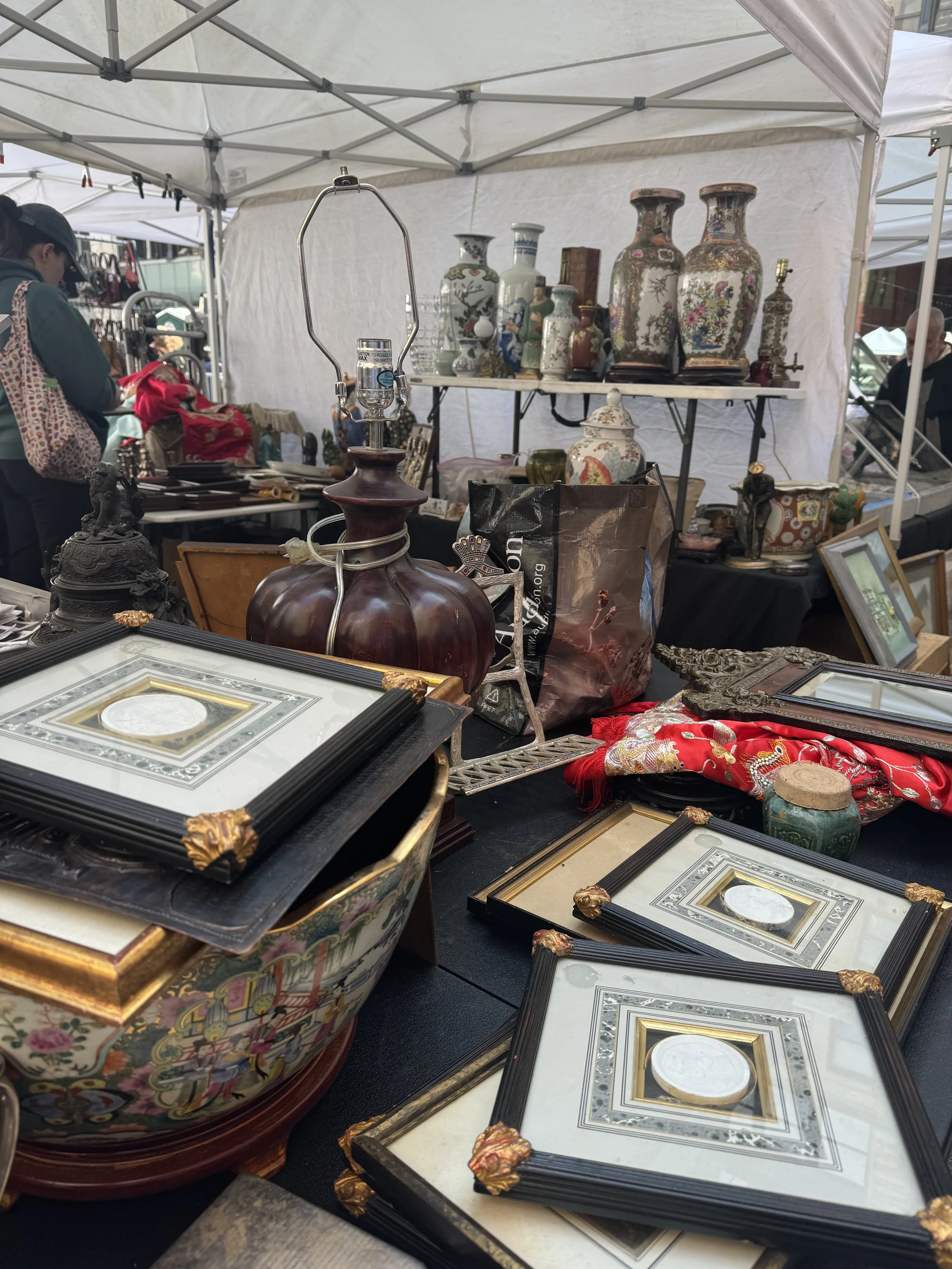
This is probably the biggest difference between shopping retail and shopping for antiques.
When I walk into a retail showroom, I may be looking for a very specific item: a 60-inch console, a pair of nightstands, or a coffee table within certain dimensions.
When I go antiquing, my approach is more spontaneous. Some of my favorite finds have happened when I wasn't searching for anything particular. Because antiques don't operate on our timeline. If you find something special, there isn't necessarily another one sitting in a warehouse when you need it six months from now.
So I keep a mental inventory of pieces that are almost always useful: small chests, stools, occasional tables, lamps, art, mirrors, interesting boxes, trays, vessels, and accessories. If it’s beautiful, versatile, reasonably priced, and I have somewhere to store it, I don't necessarily need to know its final destination before buying. I just know it’s coming home with me. Sometimes you have to buy the good thing first and figure out where it belongs later.
Know Your Measurements
This is the practical designer side of me. Keep measurements in your phone.
I have learned that "I think it will fit" is not a reliable unit of measurement, especially when you're standing three towns away from home looking at a chest you convinced yourself is a must.
Before sourcing anything—project or personal, knowing the dimensions you can work with makes for a smarter investment. Keep a note with the widths of those awkward walls, the maximum depth beside your bed, the opening under a window, your ceiling heights, or the size of the spot you haven’t quite figured out.
You may not be actively shopping for that space when you walk into an antique store. But when the right piece appears, you'll know whether it actually works.
And always keep a tape measure in your car. Always.
Look at Shape > Finish, Character > Perfection

One of the best things you can learn when antiquing is seeing a piece for what it could be.
The wood may be darker than you imagined. The hardware may not be your favorite. A lamp may have an unfortunate shade. A chair may be covered in truly terrible fabric.
Even though it can be difficult, try to mentally move past those things. (As long as there’s no real structural problems, active wood damage, odors, major cracks, or missing pieces that require costly repairs.)
And instead, look at the silhouette, proportions, legs, curve of a chest, scale of a lamp, shape of a chair back. Those are the details that are much harder, if not impossible, to change.
Upholstery can be replaced. A lampshade or even hardware can be swapped. Wood can occasionally be refinished or restored.
Good bones are good bones. This is one of the benefits of shopping with a designer. We’re trained to see what something could be rather than only what it looks like in that particular moment.
Even with a water ring, softened edge, worn brass, crazing on pottery, or other evidence that something has actually been used, an older piece can still have PLENTY to offer. In fact, an antique that’s already made it through years of everyday use may be more suited to family life than we give it credit for.
Play Detective
Open every drawer. Check the back. Search underneath. Feel how heavy it is. See how the doors close. Keep an eye out for labels, stamps, signatures, past repairs, and clues about how the piece was made.
I'm not necessarily hunting for an impressive history. Something doesn't need to be museum-worthy or from an important maker for me to love it. But construction tells you a lot.
It also helps you distinguish between something that simply looks old and something that has genuine age and craftsmanship behind it. And occasionally, the back or underside is where you find the details that tell more of the story.
Strike Up a Conversation
One of my favorite parts of sourcing antiques is asking what someone knows about a piece. Was it from a local estate? Did they find it in England or France? Was it part of a larger collection? Do they know approximately when it was made?
Sometimes they know very little. Other times, you get an entire story.
I love that.
Knowing a bit about its history makes it that much more interesting to bring into a home. It also helps you learn. The more you ask questions, the more you begin recognizing woods, periods, construction techniques, shapes, and details on your own.
Go Where the Good Stuff Is Hiding

Some of my favorite antique shops are beautifully curated. I love those, and they can be incredibly useful when sourcing for clients because someone has already done a tremendous amount of editing.
But I also love the places where you have to work a little harder.
The crowded antique mall. The estate sale. The shop with things stacked three rows deep. The booth where you're not quite sure what you're looking at yet. Or Facebook Marketplace, of all places!
The first pass is usually visual overload. But the more time you spend in one place is when you start really noticing what catches your eye and find that “diamond in the rough.”
Give Yourself Permission to Leave Empty-Handed
The thrill of antiquing can make you feel like you need to go home with something. Anything.
But I'd rather leave empty-handed than bring back something I’m not absolutely into.
The goal isn't to accumulate a bunch of old stuff. It's to slowly collect good things—pieces with character, usefulness, craftsmanship, beauty, or some combination of all four.
A collected home really does take time, partly because not everything deserves a “yes.”
But Know When Not to Walk Away
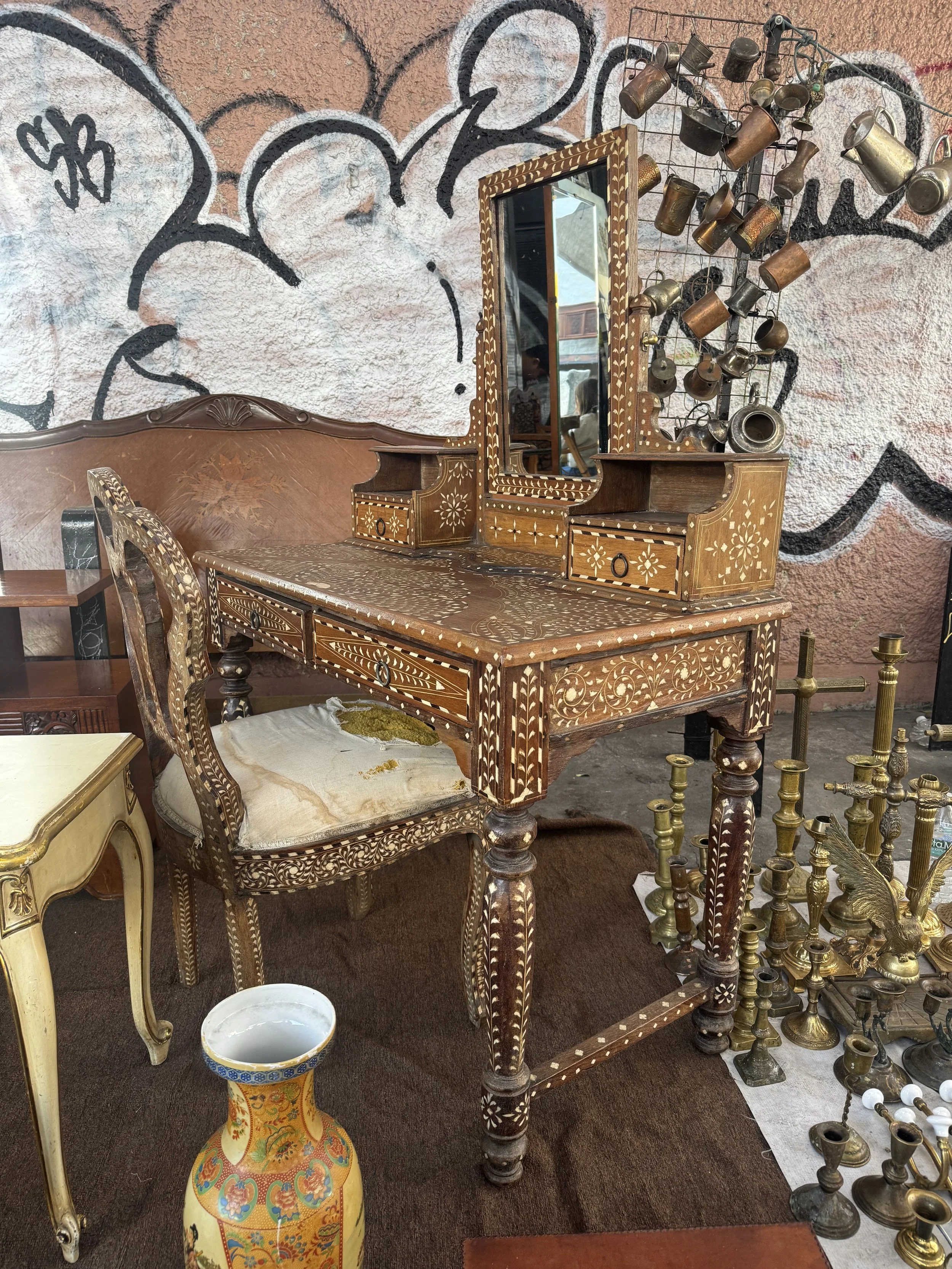
Then there are the pieces you know you’ll keep thinking about.
This is where instinct comes in.
If something feels truly special, the scale is right, the price makes sense, and you immediately start picturing all the places you could put it, pay attention to that feeling.
With retail, we’re accustomed to thinking, "I'll come back for it."
Antiques don't always give you that luxury.
I've learned that the pieces I regret are rarely the things I bought. They're usually the really special ones I talked myself out of and returned later, only to discover someone else had seen exactly what I saw.
Mix Old With New
One of my most important antique sourcing tips isn't really about sourcing at all. It's about what happens after you bring the piece home.
Some of my favorite interiors mix an old chest with a contemporary lamp, a new sofa with an antique side table, inherited art with a fresh patterned fabric, or a beautifully worn wooden piece against a crisp painted wall.
That tension is what makes a room interesting.
Too many new pieces can make a room feel flat. Too many antiques can make it feel as if you're recreating another era. I love finding the balance between the two.
It’s the same philosophy I bring to client projects at Martha Midgette Designs: honoring what has history while making interiors work charmingly for the way a family lives today.
I think that’s what makes sourcing antiques so special. We stumble upon them with stories already attached, and then they become part of the everyday moments and memories happening in our own homes. Over time, we add another chapter, and maybe one day, someone else will, too.
Looking for a designer’s eye to find the pieces that bring more layers of character, history, and meaning to your home? Inquire to start the conversation.
