
I spend a lot of my work time thinking about and envisioning how people will live in their homes.
Where will everyone naturally gather? Is there somewhere to set a drink? Can you easily pull up another chair when a friend stops by? Does the dining room feel special enough for Thanksgiving but comfortable enough for a weeknight dinner? Where will people go after dinner when they aren’t quite ready for the evening to end?
Those questions matter to me as much when I’m designing a home as when I’m hosting in my own.
Because ultimately, the dinners, holidays, drop-in visits, conversations, and real life are part of what gives a home meaning and history. It’s also why I’m known to chase excuses to host. So I’m serving up some of my favorite tips to make the experience feel lighter on your side and enjoyable for everyone around your table.
Design for Connection > Perfection
Of course, I love a beautifully set table and will happily spend hours deciding between linens, glassware, flowers, and place cards. But the goal isn't perfection. It’s creating an atmosphere where people feel welcomed, comfortable, and cared for.
I love to think about hosting as less about entertaining and more about hospitality. Entertaining can sometimes become about putting on an impressive event. Hospitality is about the people experiencing it.
Your house doesn't have to be perfectly tidy. Dinner doesn't have to be complicated. Your table doesn't have to match. The flowers can come from your yard. Because your guests will remember how they felt while they were there.
Let Your Home Do Some of the Work
Good design can make hosting so much easier.
That’s why, when I'm designing a home for a client (or my own family), I think about the natural progression of a gathering. Guests may arrive in the kitchen, move to the dining room for dinner, and eventually settle into the living room or outside around the fire.
Each space should invite people to naturally settle in and stay awhile.
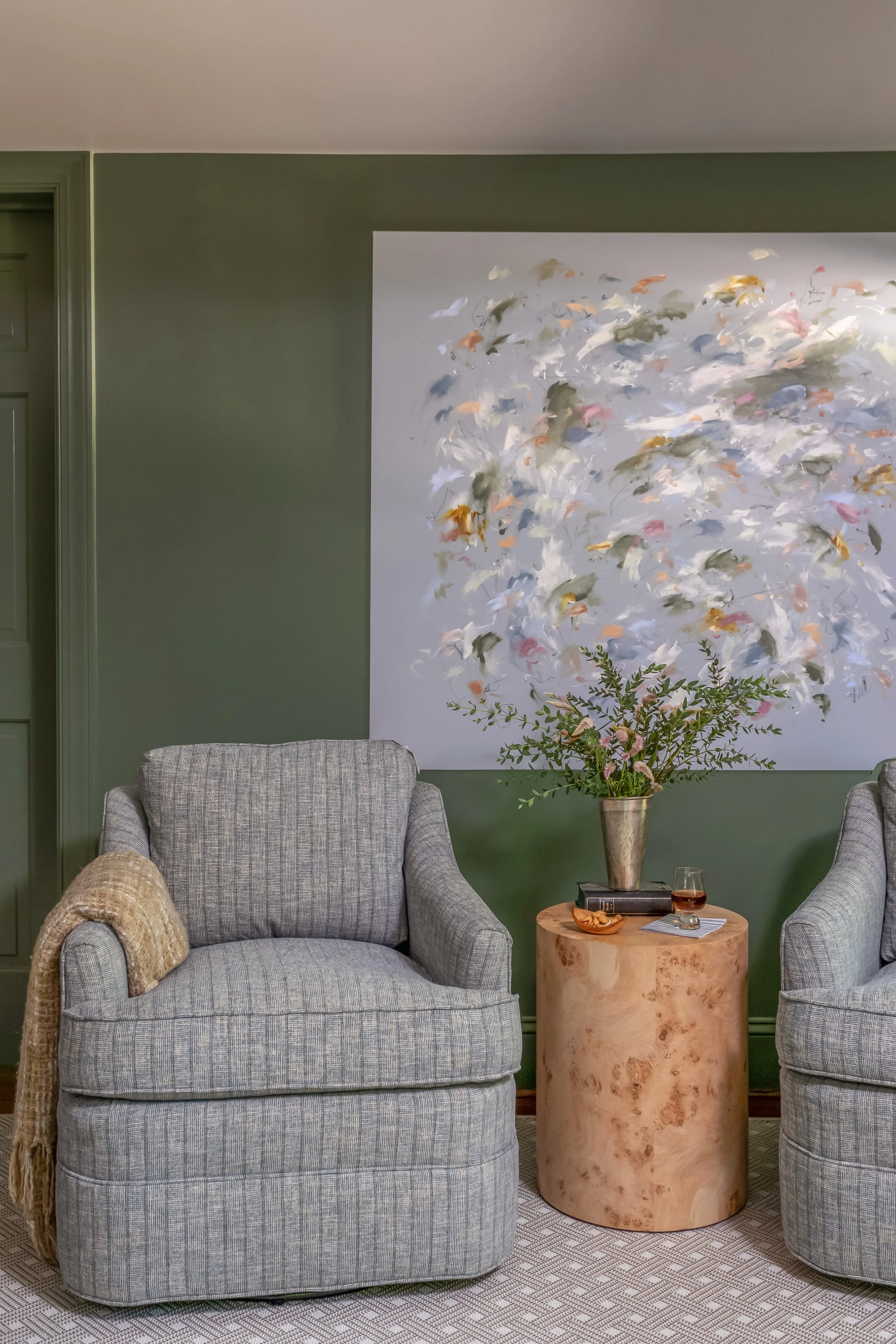
That can mean comfortable seating arranged for conversation rather than simply facing a television. Or an ottoman or small table within reach of every chair so there’s always somewhere to put a drink or prop up your feet. In the kitchen, it may call for an island that allows guests to gather without getting directly in the cook's way.
None of these things feel particularly monumental on their own. But together, they create a house that works especially well when it’s full.
Spare the Formalities
There’s something special about intentionally sitting down together around a table and using the things you might reserve for a few times a year, such as Thanksgiving and Christmas.
Let your “formal” spaces and pieces be part of everyday life. Light the candles on a Tuesday. Pull out the china you inherited. Mix your grandmother's silver with something you bought last week. Give your children a seat somewhere other than the kids’table.
That philosophy is why I’ll always defend the traditional dining room and also incorporate heirlooms and vintage pieces into my projects. The places and things we call our own really do become more meaningful the more we use them.
Think in Layers
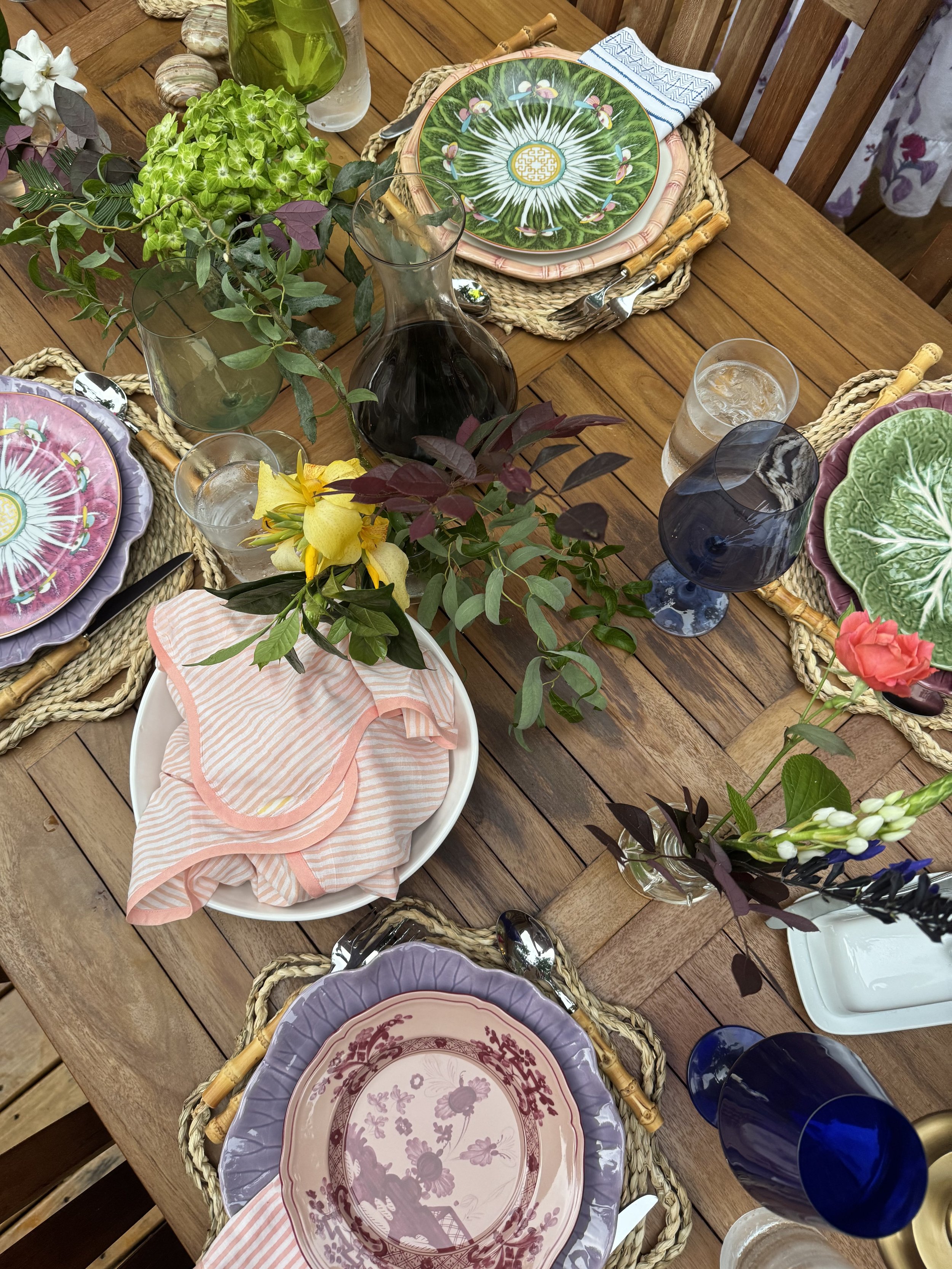
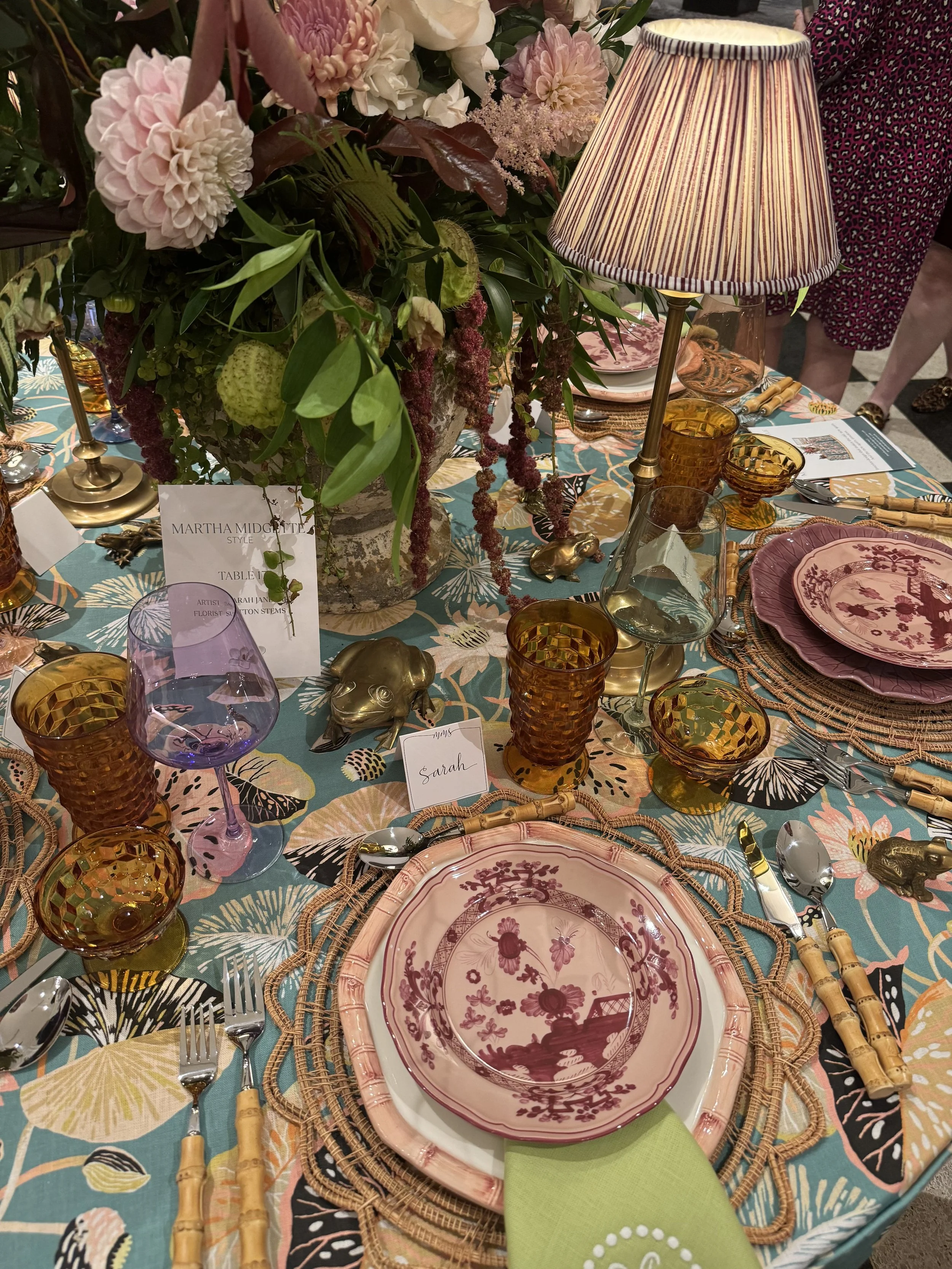
The best tables, like the best rooms, rarely come from buying everything at once. I like mine to feel collected.
Start with what you already have and build from there: a tablecloth or bare table, chargers, dishes, cloth napkins, glassware, place cards, flowers, candles. Not every layer is necessary every time, but incorporating a few elements makes an ordinary dinner feel highly considered.
I especially love mixing old and new. Vintage table linens, inherited china, flea-market finds, or your mother's candlesticks can live beautifully alongside newer glassware or dishes.
Oh, and don't worry too much about everything matching. A little coordination makes things much more interesting.
Keep Flowers Low and Candlelight Plentiful
A centerpiece should make a table prettier, not harder to see and talk to the people across from you.
I tend to use low arrangements, often with seasonal flowers or greenery. Several little vessels with a stem or two in each can be just as eye-catching as one elaborate arrangement (and sometimes more charming).
Then add candlelight.
Lighting is one of the things that has the greatest effect on a room, and that absolutely applies to hosting. Turn down the overhead lights. Strike a match for the taper candles. Add votives around the room. Turn on lamps in adjacent spaces. Before you know it, your spaces feel warmer and more intimate.
Give People a Reason to Move Around
Not every part of a gathering needs to happen around the same table in the same room.
I actually believe an evening is more fun when it involves a change of scenery.
Have cocktails in the kitchen or on the porch. Sit somewhere else for dinner. Serve dessert in the living room around the fireplace or outside by the fire pit.
Moving throughout the house keeps the get-together from feeling stiff and lets everyone enjoy more of your home.
It also takes some of the pressure off the actual dining space. Once dinner is finished, everyone can get comfortable elsewhere, kick off their shoes, and stay awhile.
That's usually when the best conversations happen anyway.
Prepare What You Can Ahead of Time
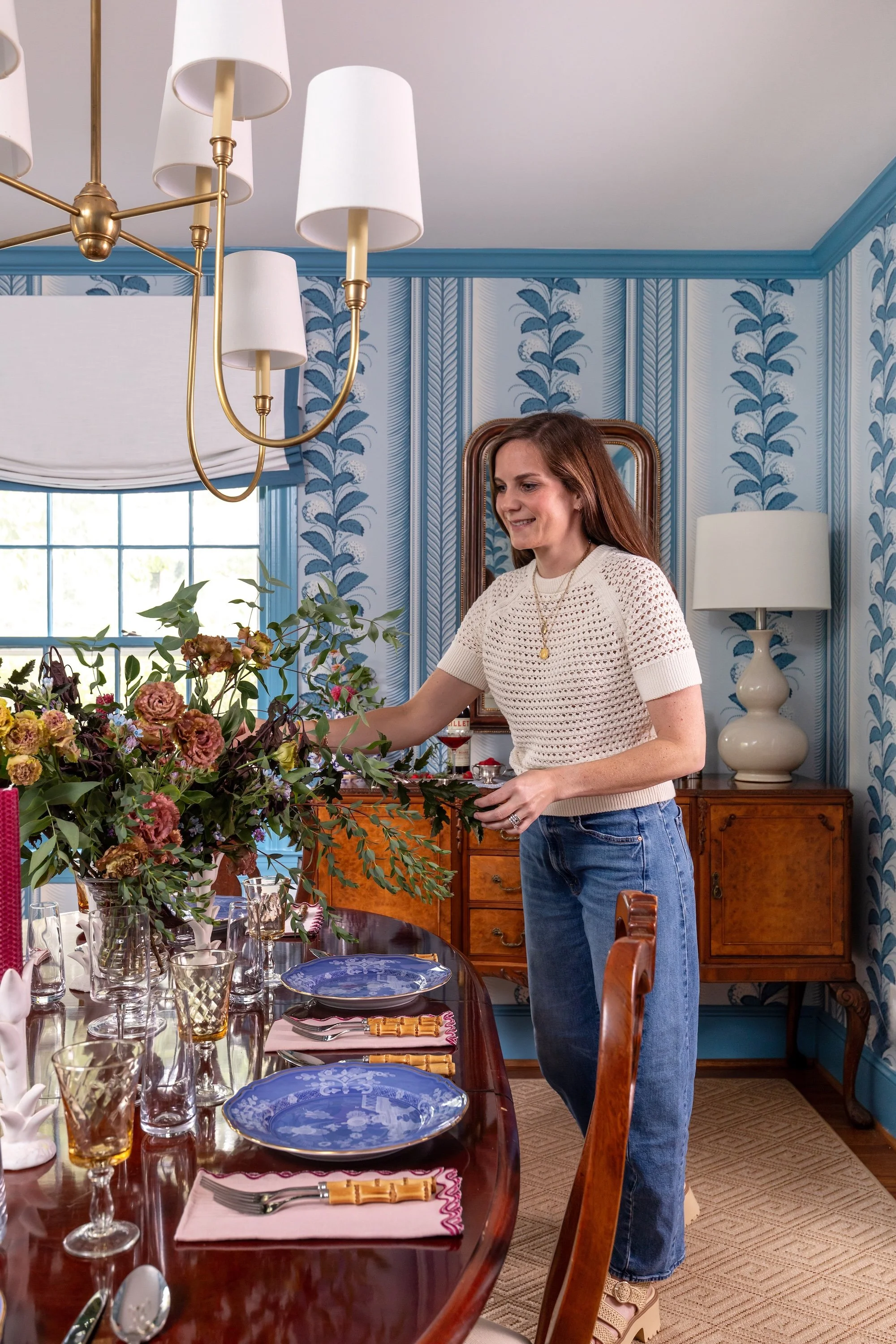
The host sets the tone.
If you're frantic when everyone arrives, your guests can feel it. I try to do as much as possible beforehand so that when people walk through the door, I can actually enjoy them and their presence.
I'll set a table well in advance—sometimes days ahead—and walk past it to see what feels like it's missing. Flowers can wait until closer to the gathering. But linens, dishes, glassware, serving pieces, and place cards can all be ready.
The same goes for food. I am decidedly more interested in designing the menu than cooking it, So in our house, my husband handles much of the cooking while I focus on the finer details and our guests.
Know your strengths. Delegate the rest.
Have Something Ready When Guests Arrive
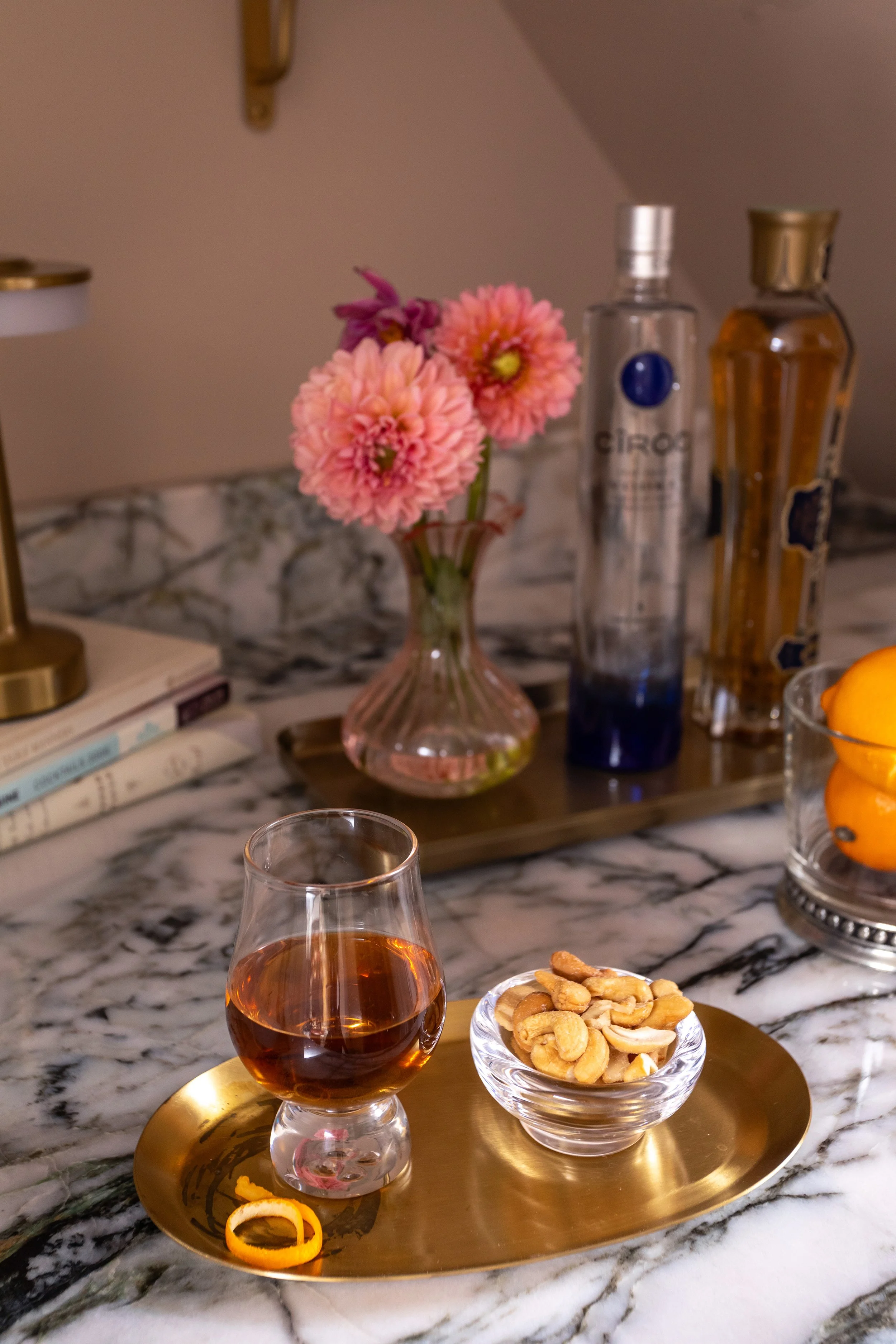
One of the easiest ways to make someone feel immediately welcomed is to have something to offer them.
It doesn't need to be elaborate. Wine, sparkling water, or a simple cocktail is plenty.
But there’s something so nice about being able to say, "I'm so glad you're here. Can I offer you a drink?" rather than telling them to help themselves.
A tray prepared with glasses and cocktail napkins makes even the simplest drink feel part of the occasion.
Add One Detail They'll Remember
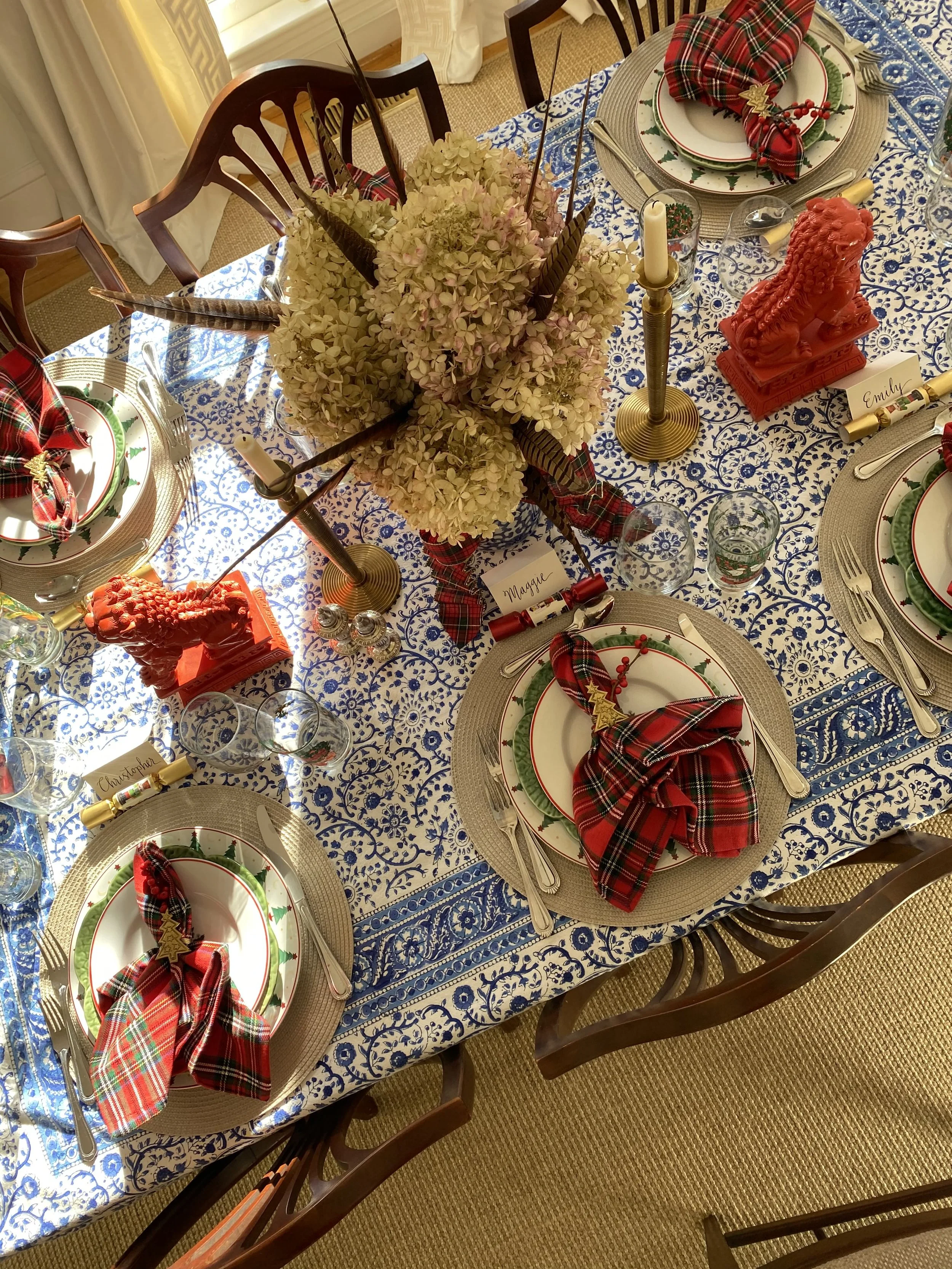
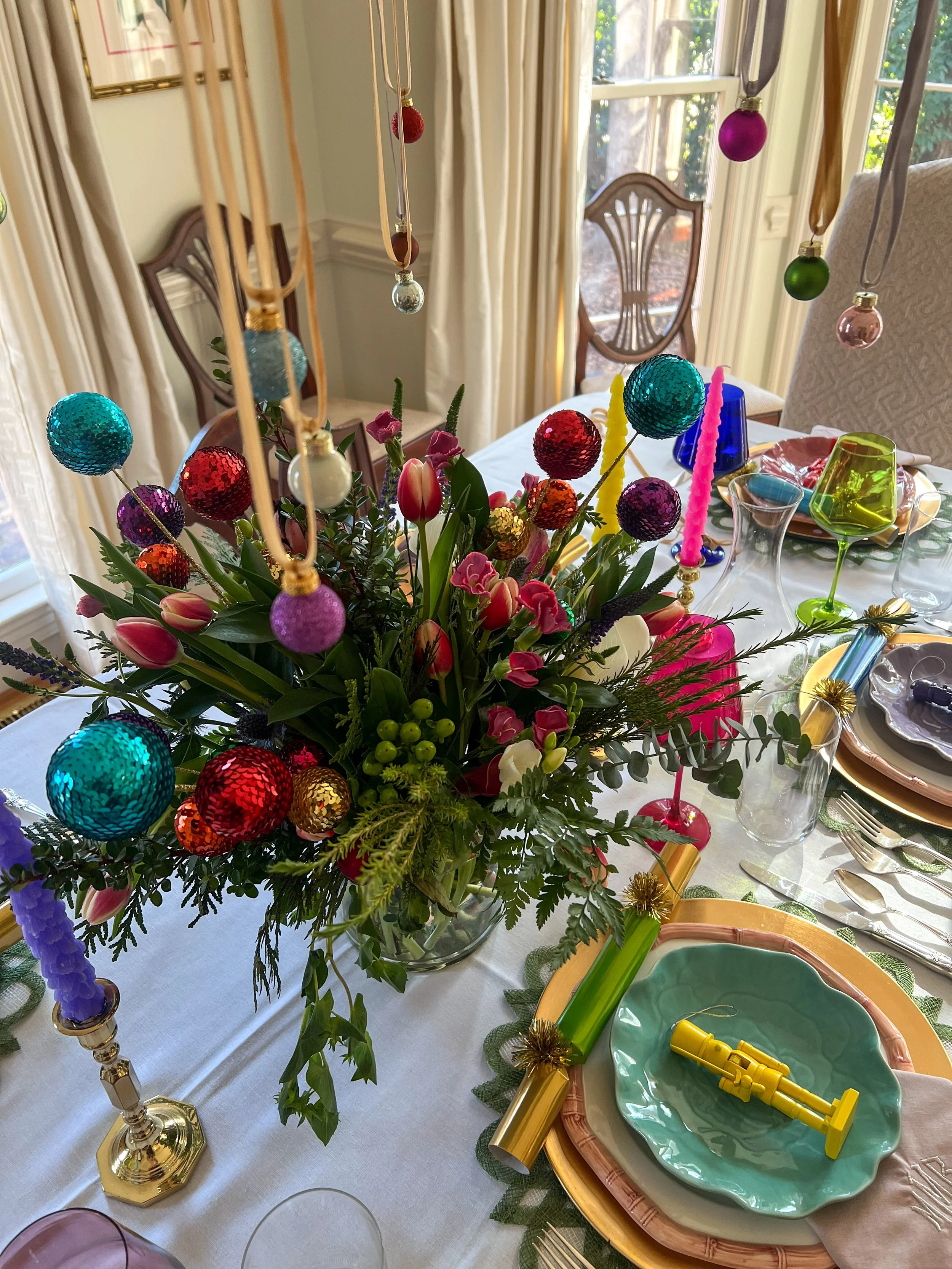
Maybe it's handwritten place cards. Maybe everyone gets a tiny bundle of flowers at their place setting. Or you serve your grandmother's dessert recipe, a signature cocktail, or even bring out a card game or the hilariously good family photo albums after dinner.
Thoughtfulness is memorable because it feels personal.
Those details don't have to be expensive or plentiful. Pick one, and it communicates that you were thinking of your guests long before they arrived.
Trust Your Home to Handle the Occasion
This may be the interior designer in me, but I don't believe we should have rooms or possessions that we're hesitant to use.
Things will inevitably spill (thank goodness for Folex). Napkins will stain. A child may leave fingerprints on something you just cleaned. A wineglass will end up somewhere you wish it hadn't.
That's life. I want to design homes that get better with living rather than homes that have to be protected from it.
So to me, a classic home isn't one that’s perfectly put together at every turn. It's one that can host every big and small occasion—years of dinners, holidays, birthday celebrations, ordinary Tuesday nights, children growing up, friends dropping by, and family coming home.
The Best Sign of a Successful Gathering
My favorite times hosting tend to end somewhere other than where they started—usually around the living room fireplace or an outdoor firepit, dessert in hand, shoes kicked off, and everyone sticking around much later than planned.
That's when you know it’s all gone just as it should.
Not because the meal was perfect or the table looked exactly the way you imagined it would. But because no one was quite ready to leave.
And really, isn't that what we're designing our homes for in the first place?
